Oh wow – look at YOU! Did you just stick your finger in a light socket girl? Frizzies or what? What? Me? Oh I use hair styling foam and it keeps my fuzz nicely tamed down. I couldn’t stand it otherwise. Well, you know what my hair is like without help. So what happened to you today? Oh, got up late and didn’t have the time to handle it. What? You don’t have any hair styling foam? Holy smokes girl, well at lunch break, we’re going to go track some down and you can get rid of that – halo effect!
So why would you want to use something in your hair that might leave it sticky or not help you style it? Hold on a second here, if that is what you think then you have the wrong idea about hair styling foam. These days it’s incredibly light, easy to use and won’t leave behind a sticky residue. Not only that, it also packs a powerful punch when it comes to styling.
Why is using hair styling foam a good idea when combating the frizzies? It’s a good idea simply because it adds badly needed moisture to your hair. But it also does more than that. It has special ingredients in it that help your hair retain what moisture it already has. That’s a bonus! And one other thing you will be interested in – it controls static. And here you thought the only thing that gave you static was your nylons while you were walking across a carpet. Nope, this static is the kind that makes your hair stick out like a Medusa’s head. Hair styling foams with static control mean you can use them in cold dry climates, and indoors of course.
If you happen to love the sun and spend a lot of time outside under its rays, check the label of the next can of hair styling foam you buy. Make sure it has sunscreen in it. Not all of them do, and this little added bonus will make your hair pretty happy, plus reduce the amount of sun damage to your tresses. Besides, being out in the sun sucks moisture from your hair and that makes your frizzies even worse.
If you happen to get a hair styling foam that comes in an aerosol container, use only about a quarter sized dab from the can. One quick push of the button should dispense all you need. If you use too much, you will be wasting the product, go through it more quickly and pay more in the long run. So be wise with your hair styling foam and just use what you need.
Get Healthy Clear Lungs and Do Away with That Chronic Smokers Cough
If you have been smoking for a while, it can have a negative effect on your lungs. Some of those negative effects are a chronic hacking cough as well as shortness of breath. If you have these symptoms, most likely, your lungs are clogging up with tar and other chemicals from smoking. But the situation is not irreversible, you can still get clear lungs in a relatively short time.
So, how does smoking interfere with your lungs? In healthy clear lungs, the passage ways in your lungs must be kept clean and free of sediments that could clog the tiny passage ways and interfere with the oxygen/carbon dioxide exchange. In order to maintain good clear lungs, your lungs contain thousands of tiny hair like stalks called cilia. The cilia continually sweep impurities and sediment out of the lungs to keep them clean.
When you smoke, tar and other chemicals are drawn into the lungs. If you are just an occasional smoker, the cilia can easily keep the lungs clean. But if you are a heavy smoker, the cilia cannot effectively do their job. As you continue to smoke, many of the tiny cilia are damaged, making the cleaning process even more difficult. Over time, tar from cigarette smoke begins to clog the tiny air chambers.
If you smoke regular cigarettes, as opposed to light or low tar versions, you inhale about 22 milligrams with each puff. Smoking 2 packs a day, you can ingest almost a quart on tar during the course of a year. It is difficult, if not impossible, for your system to keep up with this much inhaled tar and maintain clear lungs. As a result, you may experience coughing and shortness of breath.
So, what can you do if you have a nasty cough and want to get back your healthy clear lungs? The solution is simple. There is a simple process that can give you nice clear lungs. The technique uses a simple combination of food supplements and vitamins that rinse the toxins out of your lungs and flush them out of your body. This easy process will clean out your lungs 15 – 20 times faster than your body can do it on its own.
If you’ve been smoking for some time now, you can get rid of that hacking cough and get clear lungs. Download the details for this easy process at Get Clear Lungs Now!
For the person who is smoking there appears to be enjoyment and a sense of relaxation. This does not apply to non smokers who end up being surrounded with smoking fumes. While you might find it difficult to find areas where smoking from all sides surrounds non smokers, there are some places and countries where this still occurs.
When a smoker lights up a cigarette, pipe, cigar or some such other tobacco product they will need to exhale the excess smoke. The noxious fumes which are exhaled will then cover the surrounding area with smoke, fumes and various toxic materials. This passive smoking can make a non smoker susceptible to the same health problems as a smoker.
Now due to pressure from various groups there are designated places where you can find people smoking from all sides of the area. In these areas the air is thick with smoke and noxious fumes. This is however a needed area as there is sections of the public which are still hooked onto tobacco products.
While these smokers are for the most part aware of the health concerns which can arise with smoking, they still continue with their habit. The people who are at risk from smoking from all sides of an area like a street corner or an alleyway are mainly the smokers themselves. The next group of people will be the people who pass these locations.
You will find that there is a wide cross section of people who can become affected by health problems when they are confronted with smoking from all sides of a place like a smoking section of a restaurant. In a smokers section of a restaurant you will find that smokers eat at the same time as they are smoking. As a result of this the smokers section is filled with the fumes of various types of tobacco products.
This is not a phenomenon that you will see in lots of restaurants but the ones where you have these sections the reality of second hand smoke drifting out to the rest of the restaurant is real. And even though the other diners are not in that section of the restaurant they will still find that they are surrounded by fumes of smoking from all sides of the enclosed restaurant space.
Even today the battle of smokers and non smokers rages on. You will need to avoid areas where smoking from all sides can make you nauseous. The care that you take with your health today will provide you with a healthy and happy life tomorrow.
From http://www.childhood-leukemia.com/news/us-cancer-rates-falling/
Overall, cancer death rates fell 2 percent per year from 2001 to 2005 in men and 1.6 percent per year from 2002 to 2005 in women. By comparison, between 1993 and 2001, overall death rates in men declined 1.5 percent per year and, between 1994 and 2002, 0.8 percent in women.
âWe continue to see a decrease in death rates from cancer in both men and women and this is mainly because of prevention – mostly a reduction in smoking rates; detection which includes screening for colorectal cancer, for breast cancer and for cervical cancer; and also improved treatment,â said report author Ahmedin Jemal, strategic director for cancer surveillance at the American Cancer Society.
âTo put this in perspective, the number of lives saved is more than the population of Washington, D.C.,â said Dr. Louis M. Weiner, director of the Lombardi Comprehensive Cancer Center at Georgetown University. âIn my mind, thatâs a cause for some celebration. However, there are some sobering trends that we have to be aware of. The death rate for cardiovascular disease has dropped much more dramatically over that period than has the death rate from cancer, indicating the difficulty of developing new strategies to reduce the incidence of cancer and also to treat it more effectively. This is a very complex set of diseases. While we have come a long way, we have a lot further to go.â
Hopefully, continued reductions in smoking rates, especially among women, should push cancer rates further down in the future, the researchers noted.
Although some 45 million Americans continue to smoke, for a prevalence rate of about 20 percent, âsmoking prevalence is going in the right direction,â Jemal said. âWeâre going to see a reduction in lung cancer death rates, although I donât know when it might be. In particular, we will see a reduction in cancer death rates among women thatâs going to drive [down] the overall cancer death rate.â
Better screening could also further fuel the trend. Only 50 percent of Americans over the age of 50 currently get regular screening for colorectal cancer, he said.
Here is a summary of the reportâs findings:
* In 2009, an estimated 1,479,350 new cases of cancer will be diagnosed in the U.S. (766,130 in men and 713,220 in women) and 562,340 people will die of the disease (292,540 men and 269,800 women). This means 1,500 deaths from cancer every day).
* Between 2001 and 2005, the incidence of cancer in men declined by 1.8 percent per year; from 1998 to 2005 the incidence rate in women dropped 0.6 percent per year. In men, the gains were largely as a result of decreases in the incidence of lung, prostate and colorectal cancer (the three most common cancers). In women, the decline was largely attributable to declines in both breast and colorectal cancer, the two most common tumor types in women.
* Cancer death rates dropped by 11.4 percent for women between 1991 and 2005, with a 37 percent decline in deaths from breast cancer and a 24 percent decrease in deaths from colorectal cancer.
* The three leading cancer killers in men are lung, prostate and colorectal cancer. In women, they are lung (accounting for 26 percent of all cancer deaths), breast and colorectal cancer.
* Men have a 44 percent chance of developing cancer during their lifetime and women a 37 percent chance, although women are more likely to have the disease earlier (before age 60).
* Lung cancer shows the greatest regional variation in cancer incidence, ranging from a low of 39.6 cases per 100,000 in men and 22.4 per 100,000 in women in Utah to 136.2 in men and 76.2 in women in Kentucky. These statistics correlate directly to smoking rates in the two states, with Utah having the lowest prevalence in adult smoking in the country, and Kentucky the highest.
* Blacks still assume a disproportionate share of the cancer burden, with black men being 18 percent more likely to develop cancer and 36 percent more likely to die. Black women have a 6 percent lower incidence rate but this is more than made up for with a death rate, which is 17 percent higher than that seen in white women.
* The five-year survival rate for children with cancer is now 80 percent, up from only 58 percent for those diagnosed in the mid-1970s. But cancer is still the second leading cause of death in youngsters aged 1 to 14 (after accidents), with leukemia being the most common cancer diagnosed.
* And in a special section, the report finds that cancer survivors are about 14 percent more likely to develop a new cancer than individuals who have never had a cancer diagnosis; almost 900,000 cancer survivors have been diagnosed with more than one cancer. Patients diagnosed with tobacco-related cancers, such as cancers of the oral cavity, lung, esophagus, kidney, and urinary bladder, have the highest risk for a second cancer because smoking is a risk factor for at least 15 types of cancer. Breast cancer survivors comprise almost half of women who develop a second cancer.
Unfortunately, cancer remains the leading killer (surpassing heart disease) for persons under 85, and one-quarter of deaths in the United States still come from cancer, the report stated.
âItâs good news that the death rates for the most common cancers are on the decline, but there are still too many Americans dying of cancer every year,â said Dr. Alan Astrow, director of medical oncology and hematology at Maimonides Cancer Center in New York City. âItâs troubling that African-Americans continue to experience higher rates of mortality from cancer than whites. Itâs also troubling that Americans with less education have higher death rates. There are continued high rates of deaths from lung cancer. Itâs hard to feel good about 160,000 Americans dying of lung cancer every year. Thatâs a disturbing statistics which we, as a nation, need to address.â
The report appears online and in the July/August print issue of CA: A Cancer Journal for Clinicians.
Terramed Alliance is a non-profit organization in the battle against leukemia  helps  children living with cancer and their families. Our goal is to make sure children battling cancer know they are not alone. For more information please visit www.terramedalliance.org. Email at contact@terramedalliance.org
Terramed Alliance is a non-profit organization in the battle against leukemia helps children living with cancer and their families. Our goal is to make sure children battling cancer know they are not alone. For more information please visit www.terramedalliance.org. Email at contact@terramedalliance.org
CDC briefing on the September release of CDC Vital Signs reports, Current Cigarette Smoking Among Adults Aged ≥18 Years — United States, 2009 and Nonsmokers’ Exposure to Secondhand Smoke — United States, 1999–2008. The briefing is led by Thomas R. Frieden, MPH, MD, Director of the Centers for Disease Control and Prevention. Comments on this video are allowed in accordance with our comment policy: www.cdc.gov This video can also be viewed at www2c.cdc.gov
Smoking During Pregnancy: Risks to the Pregnancy and Harm to the Baby
Smoking during pregnancy is one of the worst things you can do. When you smoke, your baby smokes too. There about 600 ingredients in cigarettes, and when a cigarette is burned, it releases over 4,000 chemicals. Many of these are poisons, and at least 50 of these chemicals cause cancer. So when you take a puff, your growing baby gets exposed to these harmful pollutants too. Because your baby is developing inside you, exposure to these pollutants can be very detrimental to his overall health and the safety of your pregnancy.
The nicotine and tar in your cigarette decreases the level of oxygen and nutrients that your baby receives. This can slow down your baby’s growth and development, and it puts you at risk for miscarriage and stillbirths (a baby with no heartbeat).
Luckily, if you quit smoking immediately, your baby’s growth will return to normal shortly.
Smoking during pregnancy has been associated with 5 percent of infant deaths, 10 percent of preterm births, and 30 percent in low birth weight babies. Smoking and exposure to secondhand smoke can also increase:
Infertility—When compared to women who don’t smoke, smokers have a 30 percent increased risk of being infertile. They also experience a delay in conception—i.e. it’s harder to get pregnant when you smoke. Placental Abruption—A serious and dangerous complication that can occur during the third trimester of pregnancy. It occurs when your placenta separates from your uterine lining. Placental abruption can cause vaginal bleeding, resulting in fetal distress, uterine tenderness, and increased frequency of contractions. Preterm Premature Rupture of Membranes (PRROM)—Your water breaks early, before the onset of real labor. Placenta Previa—Your placenta grows in the lowest part of the uterus, which can cause problems for the baby. You may bleed and require prompt care. Some women are even hospitalized.
It is estimated that over 20 percent of American women in their childbearing years smoke cigarettes, despite knowing its harmful effects. In 2005, the Pregnancy Risk Assessment Monitoring System (PRAMS) survey reported that 14 percent of women smoke during pregnancy.
Babies who are born to women who smoked during pregnancy are also at an increased risk of having a cleft lip or cleft palate. A cleft palate occurs when there is a split in the baby’s lip and the roof of his/her mouth, creating a hole between the nose and mouth. Surgery is often used to reconstruct that part of the baby’s face.
The danger of smoke doesn’t end when your baby is born. Being around smoke can also put your newborn baby at risk.
When exposed to secondhand smoke, babies have an increased risk of dying from sudden infant death syndrome (SIDS). As they grow, your child is at an increased risk of developing asthma, respiratory problems, ear infections, pneumonia, and bronchitis.
Because the babies of smokers tend to be premature and have low birth weights, they are also at an increased risk of serious lifelong health problems, such as mental retardation, learning problems, and cerebral palsy. These babies are also more likely to have birth defects, including congenital heart defects.
The more you smoke during pregnancy, the more harm it will do to your baby. It is very important to try to quit smoking. Even if you can’t kick the habit completely, try to limit your daily cigarette intake.
Make an appointment to talk to your doctor or healthcare provider about your desire to quit smoking. They can refer you to a smoking cessation program and offer other ways to help you quit.
Remember to surround yourself in a positive environment. You are more likely to succeed if you have the support of friends and family who understand the harmful effects of smoking.
Dr. James Brann, M.D. ACOG is a retired obstetrician with over 26 years of experience. He has dealt with thousands of expectant mothers and their babies. He aims to offer the same level of expertise to his readers at Women’s HealthCare Topics that he does to his patients.
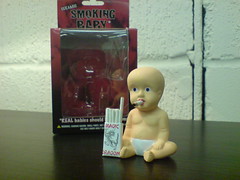
CBS News Exclusive: The Indonesian smoking baby video was an Internet sensation that left many in disbelief. CBS News cameras found the boy in a small fishing village with a lit cigarette in hand.
Usually you can give the characteristic of our whole personality simply by the way we smoke. There is huge variety of mannerisms that smokers stick to. Some people always have cigarettes drooping from their mouth. Others play with cigarettes while they are talking moving it up and down in their mouths. In order to show their aggression or irritation, some men hold the cigarette with their thumb and forefinger, the way, which the glowing end shows toward the hand. The major complains of men about the way women smoke cigarettes are that women tend to blow out smoke right into face, without even trying to avoid that.
Very often smokers will assume a pose, as they are sure that it fits their personality. For instance, one not very modest glamour woman confessed to us some of her special “smoking tricks” She was thinking that it makes her look much more glamorous and far too more attractive when she smokes cigarettes with holder. She even insisted that she studied that subject very carefully and wanted the holders to be only long and dark, comparing a long holder with a big hat: “it’s alluring and “don’t dare come close” at the same time.”
As every cigarette smoker goes through the motion of lighting and inhaling the smoke, therefore there are many ways in which these acts are carried depending on the mood.
The faster smoking tempo is, the more nervous is the one who smokes that cigarette. If the smoker is angry, he will blow the smoke in a harsh aggressive way, very impulsively, as if trying to blow somebody down. By the way, person who smokes his cigarette pressing his lips tightly around it is probably about to ask a raise for salary, as if to gain courage from holding it that way.
Among other smoking rituals are: shaking off ashes into ashtray, taking smoking accessories, putting out of cigarette, lighting the new one. Person may not even smoke, but roll a pack of cigarettes in his hand, crumple cigarette, play with the lighter.
“My brand” has a special significance, as if it were a part of the smoker’s credo and personality. For example, a guest who discovers that his host smokes cigarettes of the same brand considers this almost personal flattery. And if a girl changes to the brand of her admirer, he realizes that he surely made an impression.
Described as a filthy habit by many, smoking has long been considered a threat by most if not all non-smokers. Health-wise, the discrimination is quite reasonable, if only because the health risks to non-smokers are even greater than on those who are. Despite the fact that smoking might have benefits as a form of self-medication for depression, the “high” it produces is temporary. Needless to say, the risks associated with smoking far outweighs its very few benefits, if that word can be used at all in the context of smoking. Most people would rather not be exposed to the cigarettes and the smoke emitted from it. This is especially true in public places, if the number of territories and countries where smoking is banned in public places is any indication. However, aside from public convenience and the supposed “discrimination” against smokers, there are health benefits for non-smokers because of the smoking ban.
Recent studies show that better respiratory health has been achieved or at least is perceived to be now more attainable among non-smokers. The reason behind this positive health perception is the passage of legislation to ban smoking in public. A recent study found that non-smokers who were not exposed to second-hand smoke were showing better signs of respiratory and circulatory health than they were prior to the ban being put into place. Interestingly, most countries that have public smoking bans in place did not foresee this happening and had originally placed legislation against the habit to help cut down the number of people engaged in it. No one is complaining about this unexpected development, of course, being that it is a welcome thing for the non-smoking population.
The data contradicts the expectations of the people who institute such bans. Most people who issue legislations to ban the public consumption of tobacco and cigarettes believe it would cut down on the number of people who did so. Recent research seems to indicate that this is not the case, with the rate of people people quitting the habit remaining steady before and after the bans. This suggests that banning them from smoking in public is not helping them quit and may simply be forcing them to do so in other, less accessible areas. However, since these areas are out of the public arena, non-smokers are reaping the benefits of cleaner, smoke-free air in areas where a ban is in effect. The study also took into consideration the number of people being hospitalized for smoke-related ailments. Two areas were investigated, with one having a clear and long-standing public smoking ban, and another that had no such legislation passed. The study specifically chose two hospitals, one in each area, that admitted patients for those smoke-related ailments. The study found that less people went to the hospital for heart and respiratory conditions related to smoking were much lower in the area where the ban was in place, whereas it remained steady in the area without a ban.
The research team noted that even just a little exposure was capable of doing much damage to the cardiovascular system with evidence being provided by the study itself. The smoke causes blood vessels to constrict and reduces the amount of oxygen that goes into the brain. The study showed that, even if the non-smoker has no other risk factors, mere exposure to second-hand smoke can increase the risk of cardiovascular damage greatly.
Get Healthy Clear Lungs and Do Away with That Chronic Smokers Cough
If you have been smoking for a while, it can have a negative effect on your lungs. Some of those negative effects are a chronic hacking cough as well as shortness of breath. If you have these symptoms, most likely, your lungs are clogging up with tar and other chemicals from smoking. But the situation is not irreversible, you can still get clear lungs in a relatively short time.
So, how does smoking interfere with your lungs? In healthy clear lungs, the passage ways in your lungs must be kept clean and free of sediments that could clog the tiny passage ways and interfere with the oxygen/carbon dioxide exchange. In order to maintain good clear lungs, your lungs contain thousands of tiny hair like stalks called cilia. The cilia continually sweep impurities and sediment out of the lungs to keep them clean.
When you smoke, tar and other chemicals are drawn into the lungs. If you are just an occasional smoker, the cilia can easily keep the lungs clean. But if you are a heavy smoker, the cilia cannot effectively do their job. As you continue to smoke, many of the tiny cilia are damaged, making the cleaning process even more difficult. Over time, tar from cigarette smoke begins to clog the tiny air chambers.
If you smoke regular cigarettes, as opposed to light or low tar versions, you inhale about 22 milligrams with each puff. Smoking 2 packs a day, you can ingest almost a quart on tar during the course of a year. It is difficult, if not impossible, for your system to keep up with this much inhaled tar and maintain clear lungs. As a result, you may experience coughing and shortness of breath.
So, what can you do if you have a nasty cough and want to get back your healthy clear lungs? The solution is simple. There is a simple process that can give you nice clear lungs. The technique uses a simple combination of food supplements and vitamins that rinse the toxins out of your lungs and flush them out of your body. This easy process will clean out your lungs 15 – 20 times faster than your body can do it on its own.
If you’ve been smoking for some time now, you can get rid of that hacking cough and get clear lungs. Download the details for this easy process at Get Clear Lungs Now!
The government has received a boost after new figures showed that the smoking ban did not lead to more children being exposed to smoke in the home.
Critics of the ban said that after smoking was banned in public places like pubs and clubs, it would lead more people to drink at home, where they could light up. When it was originally introduced in 2007, pro-smoking groups like Forest said that more children could be exposed to second-hand smoke.
However a study at Cardiff University of 3,500 primary-school age children found that since 2007 there had hardly been any change in the amount of second-hand smoke they were exposed to.
The researchers took saliva swabs from the children, aged between 10 and 11, the year before the ban came in. They then did the same a year after the ban was introduced. The swabs were then tested for exposure to second-hand smoke. The children were also asked to fill in questionnaires.
In the report on the results, published in the BMC public health journal, it was concluded that after the introduction of the ban there was no significant increase in how much second-hand smoke the children were introduced to.
While the results were seen as a vindication of the smoking ban, it has been acknowledged that it is disappointing that the levels of exposure remained the same, rather than dropping. It has been hoped that the ban would lead to greater numbers of people trying smoking cessation treatments as the ban gave them extra impetus to quit.
The NHS has been strongly promoting the message that quitters are more likely to succeed if they accept help, such as nicotine replacement therapy or drugs like Champix. They have launched aggressive marketing campaigns to encourage quitting – such as the one featuring children begging their parents to give up – and have sought to make smoking cessation treatments such as Champix more widely available.
These tactics, combined with the smoking ban and the new photos of potential diseases on smoking packets, have resulting in a drop in the number of smokers of 22% from 2007 to 2008. The Cardiff study also supports findings in September which showed that a reduction in second-hand smoke in public places has resulting in a drop of 10% in the number of heart attacks in the UK.
The news comes at a time when the government has been facing fierce criticism of the ban from pub and bar owners, who say that it has resulted in a significant loss of revenue, forcing many establishments to close.
The news comes at a time when the government has been facing fierce criticism of the ban from pub and bar owners, who say that it has resulted in a significant loss of revenue, forcing many establishments to close.
Small part of a Constitutional Law Midterm Project—created by Shahreen and I. Our topic was ‘Should smoking be banned in public places’ so we made a BREAKING NEWS broadcast that unfortunately interrupted a Mario special on tv—We discussed the “Smoker’s right to the public, to be…or not to be” issue. WARNING: We would like to add that this has been done early in the morning and within a day’s notice..so we look horrible lol..ENJOY 😀
Even though we are both in our 40’s now, my oldest brother and I still get a kick out of teasing each other like we did when we were kids. This childish behavior was no exception during his recent visit. Besides the occasional “noogie” or “biff” upside the head, you might have heard my brother chant “my little sister’s ugly, my little sister’s ugly”. And of course my witty retort was “my brother’s a dumbie, my brother’s a dumbie.”
Now before you roll your eyes and write us off as a couple of mean spirited maniacs, indulge me for a moment and let me just say that my brother and I love each other dearly. We have so much fun hanging out together with our kids and just being, well, down right silly sometimes. Nonetheless, when I came across some research material recently that relates to the effects of smoking on the brain, I couldn’t help but feel a little distressed when I thought about my brother.
My brother smokes. He has smoked for years. He says it is stress buster for him. He has tried to quit several times, using several different methods but he always seems to go back to it. I, on the other hand smoked for years too, but I managed to give it up when I found out I was expecting my first child, which was over 12 years ago. I admit I almost always enjoyed the distasteful habit, especially after a big, delicious meal. But I must say I don’t miss the typical downfalls of smoking such as bad breath, stinky clothes, yellow teeth, and the most insidious side effect of all, increased risk of cancer. Plus, based on the new research, apparently I’m not losing as many brain cells either.
Although rather complicated in terms of the study itself, the findings are quite simple, and yet surprising I think to most of us. With over 172 men participating, the test was initially set out to find the long term effect of alcoholism on the brain. While it was made clear that alcoholism does have a long term effect on neurocognitive function, the study also showed that smoking may diminish the speed and accuracy of your thinking, cause memory impairment and it can actually lower your IQ.
Now I don’t know about you, but if the other side effects weren’t enough to call it quits, I think the findings from this relatively new research may just do the trick, at least for my brother. I am quite sure he won’t like it the next time I say “my brother’s dumbie” and actually have to mean it.
The Author recommends that you DO NOT Quite Smoking. There’s a healthier alternative to it. To know more, please click here.
Effects of smoking on the brain. Clip created using after effects, 3ds max and premiere