September 5, 2010

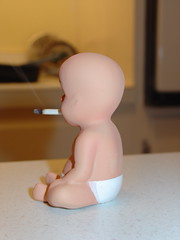
Babies: Smoking Significantly Increases Baby’s Sids Risk and Makes for a Restless Night

Babies: Smoking Significantly Increases Baby’s Sids Risk and Makes for a Restless Night

Experts found babies whose mothers smoked during pregnancy were born with smaller airways – making them more vulnerable to breathing problems after birth.  These breathing problems can put your baby at increased risk for Sudden Infant Death Syndrome (SIDS). Smoking has been linked to various health problems in babies, including prematurity and low birth weight. Mothers who smoke are at increased risk of having a stillbirth, miscarriage or premature infant. Smoking while pregnant will lower the amount of oxygen available to you and your growing baby and increase your baby’s heart rate. These health factors also contribute to raising the SIDS risk for your infant, and in your child’s decreased ability to breathe correctly or take in enough oxygen for a restful, restorative sleep at night.

Babies born to mothers who smoke are significantly lighter and shorter than those born to non smokers. Children who are exposed to tobacco smoke before birth or in the home are far more likely to suffer from respiratory illnesses and infections, which can also contribute to a decrease in quality of nighttime sleep for your baby.

The more cigarettes you or your baby’s caregiver smoke per day, the greater your baby’s chances of developing these and other health problems.  Studies show that a baby’s risk of SIDS rises with each additional smoker in the household, with the number of cigarettes smoked a day, and with the length of exposure to cigarette smoke.

So give your baby and yourself the best chance at a restful night’s sleep and keep your home and your baby’s sleeping environment smoke-free.  Your baby will thank you and you’ll sleep better knowing your baby’s risk for SIDS is greatly diminished and that your baby is breathing clean air with each breath he takes at night.

Submit your articles and get a PR4 backlink to your website! Submit Articles! We provide free articles and information. Check us out at Free Articles!

Related Baby Smoking Articles

Copyright @ StopSmokingCure.com

Filed under Baby Smoking

Permalink Print Comment

September 4, 2010

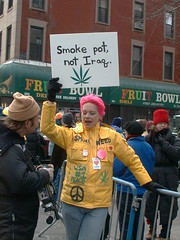
Medical Marijuana: The Debate Rages On

Medical Marijuana: The Debate Rages On

Marijuana is also known as pot, grass and weed but its formal name is actually cannabis. It comes from the leaves and flowers of the plant Cannabis sativa. It is considered an illegal substance in the US and many countries and possession of marijuana is a crime punishable by law. The FDA classifies marijuana as Schedule I, substances which have a very high potential for abuse and have no proven medical use. Over the years several studies claim that some substances found in marijuana have medicinal use, especially in terminal diseases such as cancer and AIDS. This started a fierce debate over the pros and cons of the use of medical marijuana. To settle this debate, the Institute of Medicine published the famous 1999 IOM report entitled Marijuana and Medicine: Assessing the Science Base. The report was comprehensive but did not give a clear cut yes or no answer. The opposite camps of the medical marijuana issue often cite part of the report in their advocacy arguments. However, although the report clarified many things, it never settled the controversy once and for all.

Let’s look at the issues that support why medical marijuana should be legalized.

(1) Marijuana is a naturally occurring herb and has been used from South America to Asia as an herbal medicine for millennia. In this day and age when the all natural and organic are important health buzzwords, a naturally occurring herb like marijuana might be more appealing to and safer for consumers than synthetic drugs.

(2) Marijuana has strong therapeutic potential. Several studies, as summarized in the IOM report, have observed that cannabis can be used as analgesic, e.g. to treat pain. A few studies showed that THC, a marijuana component is effective in treating chronic pain experienced by cancer patients. However, studies on acute pain such as those experienced during surgery and trauma have inconclusive reports. A few studies, also summarized in the IOM report, have demonstrated that some marijuana components have antiemetic properties and are, therefore, effective against nausea and vomiting, which are common side effects of cancer chemotherapy and radiation therapy. Some researchers are convinced that cannabis has some therapeutic potential against neurological diseases such as multiple sclerosis. Specific compounds extracted from marijuana have strong therapeutic potential. Cannobidiol (CBD), a major component of marijuana, has been shown to have antipsychotic, anticancer and antioxidant properties. Other cannabinoids have been shown to prevent high intraocular pressure (IOP), a major risk factor for glaucoma. Drugs that contain active ingredients present in marijuana but have been synthetically produced in the laboratory have been approved by the US FDA. One example is Marinol, an antiemetic agent indicated for nausea and vomiting associated with cancer chemotherapy. Its active ingredient is dronabinol, a synthetic delta-9- tetrahydrocannabinol (THC).

(3) One of the major proponents of medical marijuana is the Marijuana Policy Project (MPP), a US-based organization. Many medical professional societies and organizations have expressed their support. As an example, The American College of Physicians, recommended a re-evaluation of the Schedule I classification of marijuana in their 2008 position paper. ACP also expresses its strong support for research into the therapeutic role of marijuana as well as exemption from federal criminal prosecution; civil liability; or professional sanctioning for physicians who prescribe or dispense medical marijuana in accordance with state law. Similarly, protection from criminal or civil penalties for patients who use medical marijuana as permitted under state laws.

(4) Medical marijuana is legally used in many developed countries The argument of if they can do it, why not us? is another strong point. Some countries, including Canada, Belgium, Austria, the Netherlands, the United Kingdom, Spain, Israel, and Finland have legalized the therapeutic use of marijuana under strict prescription control. Some states in the US are also allowing exemptions.

Now here are the arguments against medical marijuana.

(1) Lack of data on safety and efficacy. Drug regulation is based on safety first. The safety of marijuana and its components still has to first be established. Efficacy only comes second. Even if marijuana has some beneficial health effects, the benefits should outweigh the risks for it to be considered for medical use. Unless marijuana is proven to be better (safer and more effective) than drugs currently available in the market, its approval for medical use may be a long shot. According to the testimony of Robert J. Meyer of the Department of Health and Human Services having access to a drug or medical treatment, without knowing how to use it or even if it is effective, does not benefit anyone. Simply having access, without having safety, efficacy, and adequate use information does not help patients.

(2) Unknown chemical components. Medical marijuana can only be easily accessible and affordable in herbal form. Like other herbs, marijuana falls under the category of botanical products. Unpurified botanical products, however, face many problems including lot-to-lot consistency, dosage determination, potency, shelf-life, and toxicity. According to the IOM report if there is any future of marijuana as a medicine, it lies in its isolated components, the cannabinoids and their synthetic derivatives. To fully characterize the different components of marijuana would cost so much time and money that the costs of the medications that will come out of it would be too high. Currently, no pharmaceutical company seems interested in investing money to isolate more therapeutic components from marijuana beyond what is already available in the market.

(3) Potential for abuse. Marijuana or cannabis is addictive. It may not be as addictive as hard drugs such as cocaine; nevertheless it cannot be denied that there is a potential for substance abuse associated with marijuana. This has been demonstrated by a few studies as summarized in the IOM report.

(4) Lack of a safe delivery system. The most common form of delivery of marijuana is through smoking. Considering the current trends in anti-smoking legislations, this form of delivery will never be approved by health authorities. Reliable and safe delivery systems in the form of vaporizers, nebulizers, or inhalers are still at the testing stage.

(5) Symptom alleviation, not cure. Even if marijuana has therapeutic effects, it is only addressing the symptoms of certain diseases. It does not treat or cure these illnesses. Given that it is effective against these symptoms, there are already medications available which work just as well or even better, without the side effects and risk of abuse associated with marijuana.

The 1999 IOM report could not settle the debate about medical marijuana with scientific evidence available at that time. The report definitely discouraged the use of smoked marijuana but gave a nod towards marijuana use through a medical inhaler or vaporizer. In addition, the report also recommended the compassionate use of marijuana under strict medical supervision. Furthermore, it urged more funding in the research of the safety and efficacy of cannabinoids.

So what stands in the way of clarifying the questions brought up by the IOM report? The health authorities do not seem to be interested in having another review. There is limited data available and whatever is available is biased towards safety issues on the adverse effects of smoked marijuana. Data available on efficacy mainly come from studies on synthetic cannabinoids (e.g. THC). This disparity in data makes an objective risk-benefit assessment difficult.

Clinical studies on marijuana are few and difficult to conduct due to limited funding and strict regulations. Because of the complicated legalities involved, very few pharmaceutical companies are investing in cannabinoid research. In many cases, it is not clear how to define medical marijuana as advocated and opposed by many groups. Does it only refer to the use of the botanical product marijuana or does it include synthetic cannabinoid components (e.g. THC and derivatives) as well? Synthetic cannabinoids (e.g. Marinol) available in the market are extremely expensive, pushing people towards the more affordable cannabinoid in the form of marijuana. Of course, the issue is further clouded by conspiracy theories involving the pharmaceutical industry and drug regulators.

In conclusion, the future of medical marijuana and the settlement of the debate would depend on more comprehensive and comparable scientific research. An update of the IOM report anytime soon is well-needed.

The HWN team provides original edgy content for Health WorldNet – Informed People, Healthier World.
http://healthworldnet.com

Haha! This was quite fun. I recommend people do this, if your webcam supports this feature. Hey, Marijuana! You make me wanna sing really stupid fucked up songs all the time!

Video Rating: 4 / 5

Related Effects Of Smoking Marijuana Articles

Copyright @ StopSmokingCure.com

Filed under Effects Of Smoking Marijuana

Permalink Print Comment

How To Stop Smoking Pot – The 3 Most Important Rules To Finally Help You Quit Smoking Cannabis!

How To Stop Smoking Pot – The 3 Most Important Rules To Finally Help You Quit Smoking Cannabis!

So you have finally decided to stop smoking pot. Firstly, I applaud you for your decision. I know from personal experience, how much cannabis can take over your life. I also know exactly how tough it is to stop smoking pot once and for all. Therefore in this article I would like to provide some tips on how to quit smoking cannabis.

1) Rather than trying to stop smoking pot cold turkey, you need to formulate a plan. Most cannabis smokers have a set routine when they try and give up. You will kid yourself that as soon as your current baggy is finished, that’s it, you’re going to quit smoking cannabis for good. So you smoke that baggy twice as quickly as you normally would and when it’s finished, you find yourself buying more! It’s a vicious circle that will control you if you allow it to.

Set a date about one month in the future as your “giving up” date. Up to this date gradually cut back on the amount of cannabis you are smoking. If you’re a heavy smoker, try and cut back to 1 or 2 joints a day. After ten days, cut this down again. One a day or one joint every alternate day for the next 10 days. For the final 10 days, try and only smoke 2 or 3 joints in total until you reach your giving up day!

2) On the day that you eventually decide to stop smoking pot, you will need to throw out and lose every single piece of drug paraphernalia that you own. Papers, lighters, roach material, bongs, bags, grinder, etc. I made the mistake of initially keeping all these things locked up in a drawer. This just makes it far easier to get sucked back in.

If the temptation to smoke cannabis is there, you are unfortunately more likely to take it. No matter what anyone tells you, pot is addictive. However, it is far more a psychological addiction that a physical one. If you leave temptation in your way, your mind is likely to take over and you will probably be smoking pot or weed by the end of the day.

3) The hardest and yet most important aspect of how to stop smoking pot is losing your friends. Cannabis is both a social and yet very unsociable drug. Usually long time pot smokers become distant from family and friends who don’t partake in their habit. However, other pot smokers soon become your closest allies.

CLICK HERE To Discover How I Finally Quit Smoking Weed

I found that most of my “pot-smoking” friends were all for me giving up and were even proud. However, I couldn’t ask or force any of them to quit smoking cannabis with me. Watching them smoke and pass round a joint between each other was killing me! Once again why would you put temptation in front of you. When you finally stop smoking pot once and for all, you will realize what a great decision you’ve made. However by hanging out with the same friends, believe me, it won’t be long before you revert back to your old ways!

WARNING: Don’t allow Cannabis or Marijuana to take over and eventually ruin your life!

The next page will explain exactly how i Quit Smoking Weed. You simply cannot afford to miss this – CLICK HERE

Copyright @ StopSmokingCure.com

Filed under Smoking Pot

Permalink Print Comment

Electric BBQ Smokers For Sale Are A Good Addition

Electric BBQ Smokers For Sale Are A Good Addition

There are just about endless differences in methodology relying upon gear, the way of BBQ or smoker grill and personal tastes. Nevertheless, listed below are some common guidelines for selecting a barbeque smoker grill.

Price: A smoker ought to be a longer term funding. As a basic rule, buy the most effective smoker you can render and justify. Listed below are some concerns.

Fuel: In case you just do not have time to handle a charcoal or wooden fire for extended burns, consider fuel or electrical. Smoke is generated via means of heating shavings or sawdust. You’ll sacrifice the genuine wood smoke taste and the sensation of pride and achievement derived from handling a fire correctly for a very lengthy time to produce excellent barbeque.

Marvelous- One Patio Smoker/Grills are transportable and straightforward to use. Charcoal will supply some smoke taste which can be supplemented by including chunks of wooden throughout the burn. The more cost-effective water electric bbq smokers for sale require a huge number of hearth tending and are typically changed to enhance performance.

The Magnificent- One Smoker/Grill is costlier but is well constructed, sturdy, and controllable, holds temperature for a long time and is assembled in a position to Smoke proper off the revenue floor. Kettles and electric bbq smokers for sale can additionally be utilized, however particular precautions and methods are needed to maintain the correct temperature and to keep it from flare-ups.

Capability: Are you simply going to cook dinner for household and a few pals, or have huge parties and even do a little catering?

Portability: That is how straightforward it is to transport the smoker round, all Significant-One Patio fashions include the pneumatic tire for simple portability.

Steel Thickness and Quality: Test the thickness of the metallic building, additionally look for People who smoke that are welded collectively not bolted. The more cost-effective the smoker, more the bolts to carry it together, hence causing warmth loss amongst the bolt joints.

Temperatures and Smoke: Temperature is actually what distinguishes Smoking from different types of cooking with fire. Smoking is a kind of smoke cooking, however smoke cooking (which incorporates higher temperatures) isn’t necessarily barbecuing. You could use a grill to make barbeque however it’s not grilling (additionally a hot temperature cooking tactic). Chilly smoking is finished at temperatures of lower than 120 F. Truly, there are barely two legislation in Smoking on Magnificent- One Smoker/Grill barbecues. Low and gradual: Lengthy cooking occasions of four to 20 four hours, relying upon the beef, at temperatures starting from 200 to 275 F measured on the beef level, permits robust beef to get smooth with out drying out 225 to 250 is good. Keep your smoke candy: Stale or bitter smoke ends in a powerful, sour and unsightly flavor.

Keep a small however lively fire. Handle airflow in the course of the smoker. Stay the higher spinner open to turns and keep watch over the hearth with the underside spinners. Do not permit the hearth to smolder or starve for air.

Use prime quality wooden for smoke. Wood ought to be well seasoned, solely use green wooden if you actually know what you’re doing. Use solely hardwoods for smoke. Hick and cherry are positive conventional woods and simple for newcomers to use. Keep away from wooden from conifers or needle bearing bushes comparable to pine.

We here at Paw Paws Outdoor Store are devoted to giving you the best shopping experience you can have. We have electric bbq smokers for sale, which are simple & perfect for camping.

Copyright @ StopSmokingCure.com

Filed under Smoking Candy

Permalink Print Comment

September 3, 2010

Health Effects of Smoking That Every Smoker Should Know

Health Effects of Smoking That Every Smoker Should Know

Smoking was once thought to be “cool” and many people, especially the younger generation attempting to emulate the more experienced folks energetically participated and quickly became addicted and vulnerable to the Health Effects Of Smoking, without thinking, and in the case of youth, without the experience and knowledge needed to consider future consequences.


Youth, peer pressure, and sometimes just pure innocence have a way of misleading us at times, but those times are the times that most of us commonly look back on as we progress in Life, experience preventable health risks and say, “If only I could go back and do things differently”.


Armed with modern day information on the health risks of smoking, a lot of current smokers would probably go back to prevent the negative health effects if they could, in any case, they could surely find the incentive to stop smoking from the alarming facts.


Because of the approximately four thousand different chemicals coming from cigarette smoke, many of which are toxic, a person’s organ functions and immune system can be affected if a smoker-smokes for a long time. Occasionally, in minimal cases, a smoker will experience negative affects to the internal organs and immune system after less than a year of smoking.


Chemicals in cigarette smoke affect the Human body in many ways:


The nicotine gets to the brain in just a matter of seconds after inhaling cigarette smoke and is found in all parts of a smoker’s body, including in the breast milk of nursing mothers.


Carbon monoxide binds itself to the red coloring matter of red blood corpuscles called hemoglobin which deliver life giving oxygen to the body’s tissues – hemoglobin also delivers carbon dioxide from body tissues to the lungs.


The much heard of carcinogens cause cancer and damage genes that control cell growth, influencing them to form abnormally or to generate to fast, whereas a carcinogen known as benzopyrene binds itself to smokers’ major organs and airways.


Chemicals from cigarette smoke also induce a physiological reaction called oxidative stress to occur. The oxidative stress causes DNA to mutate and brings about inveterate lung injury. Oxidative stress is also suspected to be behind the aging process which contributes to cancer development and heart disease.


Antioxidants that the body produces help it to repair its damaged cells, but smoking inhibits the production of those antioxidants.


The health effects of smoking that every smoker should know about but apparently does not, impact the body with unnecessary health risks that if known about and understood, would most-likely-cause all smokers to reconsider their asinine choice.

Stop Smoking with an Electronic Cigarette.

Ready for a smoke free life? Watch this important video of an Electronic Cigarette in Action. Stop smoking with Njoy Electronic Cigarettes Today!

Related Smoking Chemicals Articles

Copyright @ StopSmokingCure.com

Filed under Smoking Chemicals

Permalink Print Comment

Help the Frizzies With Hair Styling Foam

Help the Frizzies With Hair Styling Foam

Oh wow – look at YOU! Did you just stick your finger in a light socket girl? Frizzies or what? What? Me? Oh I use hair styling foam and it keeps my fuzz nicely tamed down. I couldn’t stand it otherwise. Well, you know what my hair is like without help. So what happened to you today? Oh, got up late and didn’t have the time to handle it. What? You don’t have any hair styling foam? Holy smokes girl, well at lunch break, we’re going to go track some down and you can get rid of that – halo effect!

So why would you want to use something in your hair that might leave it sticky or not help you style it? Hold on a second here, if that is what you think then you have the wrong idea about hair styling foam. These days it’s incredibly light, easy to use and won’t leave behind a sticky residue. Not only that, it also packs a powerful punch when it comes to styling.

Why is using hair styling foam a good idea when combating the frizzies? It’s a good idea simply because it adds badly needed moisture to your hair. But it also does more than that. It has special ingredients in it that help your hair retain what moisture it already has. That’s a bonus! And one other thing you will be interested in – it controls static. And here you thought the only thing that gave you static was your nylons while you were walking across a carpet. Nope, this static is the kind that makes your hair stick out like a Medusa’s head. Hair styling foams with static control mean you can use them in cold dry climates, and indoors of course.

If you happen to love the sun and spend a lot of time outside under its rays, check the label of the next can of hair styling foam you buy. Make sure it has sunscreen in it. Not all of them do, and this little added bonus will make your hair pretty happy, plus reduce the amount of sun damage to your tresses. Besides, being out in the sun sucks moisture from your hair and that makes your frizzies even worse.

If you happen to get a hair styling foam that comes in an aerosol container, use only about a quarter sized dab from the can. One quick push of the button should dispense all you need. If you use too much, you will be wasting the product, go through it more quickly and pay more in the long run. So be wise with your hair styling foam and just use what you need.

Find out more about Hair Styling Foam and Cheap GHD Hair Straighteners to use with your hair please visit http://www.cheap-ghd-hair-straighteners.co.uk/hair-styling-foam.html.

Surfing on web…!

Video Rating: 4 / 5

Copyright @ StopSmokingCure.com

Filed under Smoking Girls

Permalink Print Comment

September 2, 2010

Smoking From All Sides

Smoking From All Sides

For the person who is smoking there appears to be enjoyment and a sense of relaxation. This does not apply to non smokers who end up being surrounded with smoking fumes. While you might find it difficult to find areas where smoking from all sides surrounds non smokers, there are some places and countries where this still occurs.

When a smoker lights up a cigarette, pipe, cigar or some such other tobacco product they will need to exhale the excess smoke. The noxious fumes which are exhaled will then cover the surrounding area with smoke, fumes and various toxic materials. This passive smoking can make a non smoker susceptible to the same health problems as a smoker.

Now due to pressure from various groups there are designated places where you can find people smoking from all sides of the area. In these areas the air is thick with smoke and noxious fumes. This is however a needed area as there is sections of the public which are still hooked onto tobacco products.

While these smokers are for the most part aware of the health concerns which can arise with smoking, they still continue with their habit. The people who are at risk from smoking from all sides of an area like a street corner or an alleyway are mainly the smokers themselves. The next group of people will be the people who pass these locations.

You will find that there is a wide cross section of people who can become affected by health problems when they are confronted with smoking from all sides of a place like a smoking section of a restaurant. In a smokers section of a restaurant you will find that smokers eat at the same time as they are smoking. As a result of this the smokers section is filled with the fumes of various types of tobacco products.

This is not a phenomenon that you will see in lots of restaurants but the ones where you have these sections the reality of second hand smoke drifting out to the rest of the restaurant is real. And even though the other diners are not in that section of the restaurant they will still find that they are surrounded by fumes of smoking from all sides of the enclosed restaurant space.

Even today the battle of smokers and non smokers rages on. You will need to avoid areas where smoking from all sides can make you nauseous. The care that you take with your health today will provide you with a healthy and happy life tomorrow.

Copyright @ StopSmokingCure.com

Filed under Smoking Section

Permalink Print Comment

September 1, 2010

Smoking From All Sides

Smoking From All Sides

For the person who is smoking there appears to be enjoyment and a sense of relaxation. This does not apply to non smokers who end up being surrounded with smoking fumes. While you might find it difficult to find areas where smoking from all sides surrounds non smokers, there are some places and countries where this still occurs.

When a smoker lights up a cigarette, pipe, cigar or some such other tobacco product they will need to exhale the excess smoke. The noxious fumes which are exhaled will then cover the surrounding area with smoke, fumes and various toxic materials. This passive smoking can make a non smoker susceptible to the same health problems as a smoker.

Now due to pressure from various groups there are designated places where you can find people smoking from all sides of the area. In these areas the air is thick with smoke and noxious fumes. This is however a needed area as there is sections of the public which are still hooked onto tobacco products.

While these smokers are for the most part aware of the health concerns which can arise with smoking, they still continue with their habit. The people who are at risk from smoking from all sides of an area like a street corner or an alleyway are mainly the smokers themselves. The next group of people will be the people who pass these locations.

You will find that there is a wide cross section of people who can become affected by health problems when they are confronted with smoking from all sides of a place like a smoking section of a restaurant. In a smokers section of a restaurant you will find that smokers eat at the same time as they are smoking. As a result of this the smokers section is filled with the fumes of various types of tobacco products.

This is not a phenomenon that you will see in lots of restaurants but the ones where you have these sections the reality of second hand smoke drifting out to the rest of the restaurant is real. And even though the other diners are not in that section of the restaurant they will still find that they are surrounded by fumes of smoking from all sides of the enclosed restaurant space.

Even today the battle of smokers and non smokers rages on. You will need to avoid areas where smoking from all sides can make you nauseous. The care that you take with your health today will provide you with a healthy and happy life tomorrow.

Copyright @ StopSmokingCure.com

Filed under Smoking Section

Permalink Print Comment

Make Your Choice: Smoking And Drinking or Sex

Make Your Choice: Smoking And Drinking or Sex

Many men suffer from bedroom performance-related issues. Recent studies have put the number of men suffering from erectile dysfunction at 40 percent, but it is thought that the true figure should be higher because many men choose not to acknowledge the truth.


The most common causes for erectile dysfunction are diseases, like diabetes and hypertension, and lifestyle choices like smoking and drinking. Actually, anything that has a negative effect on the normal flow of blood is bound to interfere with the sex life. This direct link between a healthy blood flow and a normal sex life has been established by various studies.


– According to a study conducted by the Section of Endocrinology of the Lahey Hitchcock Medical Center, Burlington, Massachusetts, smoking causes a significant drop in the number of spontaneous erections that happen during sleep.


– These erections are one of the telltale signs of a good blood flow and a healthy sex life. A decrease in their frequency or intensity is a sure sign that erectile dysfunction is close by. The study has also shown that refraining from smoking for as little as 24 hours brought about a dramatic increase in the quality of spontaneous erections. Smoking is also the root of many other problems, including lung cancer.


– The Department of Psychiatry from the University Medical School of Lubeck, Germany, published a study proving that heavy drinkers suffer more often from erectile dysfunction than occasional drinkers.


– Alcohol tends to induce a pleasant state of relaxation and is generally thought to have a positive effect on the libido. However, alcohol is a suppressant and has a major negative impact on the libido. It also makes it harder for men to achieve and maintain an erection.


– The Lawrence Livermore National Laboratory, which is managed and operated by the University of California, has conducted its own study regarding the effects of smoking among teenagers. The study revealed that smoking has a disastrous impact on the quality of semen.


– This means that teenagers who are heavy smokers are jeopardizing their chances to have children and also increasing the risk of having children who suffer from various genetic problems due to the damaged DNA received form the father or mother.


– The University of Berne, Switzerland, has backed this finding by unveiled the results of its own research. Statistical analysis conducted in Switzerland demonstrated significantly lower semen quality in smokers compared with nonsmokers. Sperm concentration was also strongly affected.


Although freedom of choice is important for every individual, there are some things that should be sacrificed for the sake of a healthy and satisfying sex life. Not even the energy of youth can offset the toll that smoking and drinking are bound to take on sex. For more information on smoking and drinking related issues feel free to contact the VolumePills customer support team. They are sure to answer any questions, no matter how delicate or obscure the subject.

Find more about erectile dysfunction and cure it with procalisx or prosolution pills.

Hurricane by name… natural disaster by nature. Pure genius.

Video Rating: 4 / 5

More Smoking And Drinking Articles

Copyright @ StopSmokingCure.com

Filed under Smoking And Drinking

Permalink Print 25 Comments

August 31, 2010

Global Smoking Trends- Where Tobacco Companies Make Money These Days?

Global Smoking Trends- Where Tobacco Companies Make Money These Days?

Smoking has become the affliction of a large magnitude of people and others seem to be joining the smoke bandwagon at an alarming rate. Smoking has become a very common sight with one out of every fifth person being a smoker. The trend of smoking has become very common among teenagers also. The problems one gets due to smoking are many, but they do not seem to encourage people to stop smoking or deter people for starting to smoke. The hazardous effects of smoking are many, but people do not seem to be paying heed; the tobacco companies seem to be the only one is reaping the rewards out of smoking.

Since tobacco was born, it has been a few companies dominate the tobacco industry. These companies control most of the production and distribution around the world. They are quick to adapt to their policies and tactics to conform to the regulations set by the government and cater to the needs of the ever-increasing number of smokers around the world.

Tobacco companies of the world

A few companies hold the tobacco production and control of tobacco; the three largest companies sell close to two thirds of the entire supply. The stagnation in demand has prompted them to explore new markets.

The government is in a predicament since the tobacco industry accounts for a vast amount of jobs, but it also has to protect the health of its citizens. The government has tried to cut down on smokers by increasing the taxes imposed on them. By increasing the taxes on tobacco products and leveling higher duties on the companies, the companies are forced to raise the prices, which indirectly reduce use; since higher priced goods will be used less often. There is not much the government can do since tobacco is not a banned product.

The large companies also diversify their business to keep abreast in the market. They use various ways the companies diversify.

By market segments: Products are usually divided into categories, from high priced premium cigarettes to low and middle class of cigarettes. Companies with big brand names sell premium high priced cigarettes but also expand in to lower class sales to protect them from susceptibility. A decline in sales of premium cigarettes will be ploughed back by the sales in the lower or middle brands of cigarettes.

By target group: Every cigarette has its target group. By creating a new target group, the company can raise its overall market share. Thus the need to branch out into women cigarettes and target young people.

This targeting of women and youngsters has been seen in bad light. The tobacco industry has long targeted young people with its advertising and promotional campaigns. One of the most memorable, “Joe Camel” campaign initiated by the R.J. Reynolds Tobacco Company, helped generate public outrage against tobacco company efforts to reach young audiences and it is no longer used. The reason is obvious, most people start smoking at an early age. Getting a hold on a new segment will increase its share in the market.

Women are also a segment that the industries try to win over. Cigarettes for women are put forward as a symbol of liberation and some even shown in the light of slimming products. Manufacturers produce (long, slim) cigarettes especially for women. Perfumed or scented cigarettes with exotic flavors are targeted at women. Cigarettes usually have the word “slim” or “lights” to attract women consumers. Minorities are also a target for the tobacco industry.

Diversification by tobacco products: cigarettes companies also try to branch out into other tobacco products. For example, Imperial tobacco has decided to branch out into the roll your own segment; it dominates both the tobacco and the paper for this segment.

Diversification by non-tobacco products: food seems to be the favorite for companies seeking to diversify. R.J. Reynolds bought Nabisco (which, in turn, was later acquired by Kraft) owned by Philip Morris. Japan Tobacco derives a (small) part of its sales from food. Logistics and wholesaling are another favorite

Austria Tabak, wholesaling of tobacco and other products (and the operation of vending machines) makes up a large share of turnover. Over 20 per cent of Altadis’ earnings originate in its logistics division. Skandinavisk Tobakskompagni owns the largest wholesaler of consumer goods in Denmark. BAT tried financial services (but, since 1998, is a pure tobacco company).

Diversification into food and other activities makes the tobacco companies less dependent on (slow-growing) sales of tobacco products. However, the profit margins in these industry are usually well below those attained in tobacco processing. Producing and marketing cigarettes remain the more lucrative activity.

Incase of diversification by geographical market, OECD-based tobacco companies are keen to reduce their dependence on their stagnant home markets and establish a presence in markets where growth is above average. After having started business in many markets in Latin

America, Central and Eastern Europe, and the Central Asian republics in the 1990s, their center of attention is shifting to the Far East. All the major tobacco companies now have a presence in Poland, Russia and the Central Asian republics. Austria Tabak, which gained a presence in

Estonia when it acquired the cigarette activities of Swedish Match also has a 67 per cent market share in Guinea. The company was considering entering Asian markets when it was taken over by Gallaher in June 2001. Through this take-over and the acquisition in 2000 of Liggett-Ducat, the Moscow cigarette maker, Gallaher greatly reduced its dependence on the UK market. Similarly, Japan Tobacco became a world player when it acquired the international activities of R.J. Reynolds. Thanks to a relentless internationalization drive, Germany’s Reemtsma now sells less than one-third of its total in its home market (compared to over 60 per cent in 1991) (see also figure 6). It is now on the go in several Central and Eastern European countries and, in 1999, it acquired Cambodia’s Paradise Tobacco Company.

The government.

A predicament is generally faced by the Governments all across the world. On the one hand, tobacco-growing and processing can makes a large contribution to employment, tax revenue and foreign exchange receipts. In many developing and formerly centrally planned economies, the tobacco companies have made sizeable and most welcome investments when other investors were disinclined to do so. On the other hand, governments have the responsibility to protect the population’s health. Smoking is harmful to health and treating people for smoking-related illnesses is expensive. This can lead to heated debates within the same government as each sector defends the interests it believes it should represent.

The economic importance of tobacco growing and processing differs from country to country. At the national level, cigarette (sales and import) tax can be a main source of government revenue. In Russia, cigarette tax revenue contributes around 8 per cent to the financing of the state budget.

When the government owns the industry, it receives profits in addition to tax. That is why, in so many countries, State monopolies continue to control cigarette trade and production. In China, proceeds from state-owned CNTC amounted to the equivalent of US,000 million in 1999. CNTC has been the Chinese State’s top revenue generator for years. Japan Tobacco earned more than US0 million for the Japanese State in the fiscal year ending March 2000. The monopolies can also play a social function. In Italy, several of the state monopoly’s factories are to be found in areas of high unemployment.

Then there are balance of payments issues to mull over, many low-income countries rely on the export of cash crops such as tobacco to pay for the service of their foreign debt.

Tobacco exports made up close to 10 per cent of Cuba’s exports in 1997-98. In the case of

Tanzania it was 15 per cent, In Zimbabwe over 25 per cent and in Malawi tobacco exports made up two-thirds of commodity exports.

Citizens smoke. But, if they smoke domestically produced cigarettes, using homegrown tobacco or use imported cigarettes and tobaccos can make a large difference when foreign exchange is scarce. That explains why so many countries try to restrict the imports of cigarettes and encourage domestic producers to use local tobaccos, for example, by providing a favorable tax treatment to companies that use a minimum percentage of homegrown tobaccos. The cigarette companies have also been a key source of investment in the formerly centrally planned countries of Central and Eastern Europe, and Central Asia. When others were disinclined to invest, those companies saw the possibilities offered by a blend of pent-up consumer demand, outdated production facilities and the association with independence and “western style” living that so appealed to the people in these countries after many years of central planning and little consumer choice. After having lobbied successfully for the reduction of restrictions of Asian markets such as Japan and the Republic of Korea, the large tobacco companies are eagerly waiting for the opening up of the other economies (notably China) that continue to restrict imports from and/or investments by foreign tobacco companies.

Tobacco growing, processing and exports can thus make a significant involvement to national employment and national income. Yet, however important tobacco growing and processing may be at the national level, its full economic and social significance is best grasped at the micro or regional level. In some regions, tobacco is grown side by side with the crop, which is the main source of income; its contribution to overall income is modest. However, in many others, tobacco is a main source of income and employment.

Tobacco growing and tobacco processing may bring substantial economic and social benefits, but the treatment of smoking-related illness is costly. Cigarette smoking causes cancer. It is addictive. The WHO estimates that tobacco products cause around 3 million deaths per year. Cigarette smoking is the major cause of preventable mortality in developed countries. In the mid-1990s, about 25 per cent of all male deaths in developed countries were due to smoking. Among men aged 35-69 years, more than one-third of all deaths were caused by smoking. The costs of treating all these people are clearly enormous (WHO, 1997).

So far, smoking has not had the same impact on mortality among women and among people from developing countries. There is an approximate 30-40 year time lag between the onset of persistent smoking and deaths from smoking. The effects of the greater incidence of smoking between these two groups will thus be felt with a lag, but it seems reasonable to believe that its impact on them will not differ fundamentally from that on developed country males.

It may be argued that smokers willingly take a certain health risk when enjoying their smoke. They like the taste and all the other things that they associate with smoking. Nevertheless, this does not apply to environmental tobacco smoke (ETS) or “second-hand smoke”.

Smoke gets in your eyes your clothes. Moreover, it gets in your lungs. Non-smokers cannot escape from smoke in badly ventilated areas. To be exposed to other people’s tobacco smoke can be a nuisance in addition to being a health risk for non-smokers.

Governments and conflicting pressures: How do they get by?

In practice, governments have opted for several strategies (which are often followed simultaneously). A recent strategy consists of seeking compensation for the costs of treating smoking-related illnesses. It has been followed with success in the United States, as we saw in section 3.4. Governments also set rules regarding the maximum content of hazardous substances in cigarettes. Most of all, however, governments try to discourage demand for what is, as the industry does not tire of telling us, essentially a legal product.

This is done in a variety of ways, with some governments applying particular vigor and others taking a more relaxed approach. Overall, however, the trend is clear: governments’ rules on smoking are becoming ever more restrictive. The use of tobacco products is being discouraged in several ways.

Limitation of the space where smoking is allowed.

This is done above all to protect non-smokers from involuntary exposure to tobacco smoke. Smoking is being prohibited in public places (particularly health care and educational facilities) and in mass transport. Legislation requires restaurants to reserve space for non-smokers.

Limitation by age group

It is prohibited to sell tobacco products to people under a certain age.

Limitations on points of sale.

The use of vending machines is being restricted because these cannot discriminate against sales to young people.

Health warnings stating that tobacco is harmful to health have become obligatory.

The warnings must be placed on packets and in ads, with the authorities prescribing the text and the minimum space allotted to the warning in the ad or on the pack. Governments sponsor education and public information programs on smoking and health.

Advertising bans. Restrictions concern the location of ads, the media used (no billboards, no ads in the printed media or in cinemas), the images presented (no young people, no cigarette packets), and the time when broadcasting is allowed (not during hours when children watch television).

The manufacturers are unhappy with these restrictions, and in particular with the ban on advertising. In their view, it is not proved that such a ban discourages demand for cigarettes (as its proponents claim). They are concerned about its effect on the value of their prime asset, the brand name.

Worldwide, the tobacco-processing industry employs hundreds of thousands of people. However, due to a combination of slow demand growth, consolidation, and higher productivity, this number is unlikely to increase by much in the near future. Fewer people are needed per unit of production. The industry is becoming less intensive in the use of labor. Tobacco growing, in contrast, gives work to millions of people. It continues to be a highly labour-intensive activity. The scope for productivity increases in tobacco growing would appear to be more limited than those in tobacco processing.

Over a million people are employed in the world tobacco industry

However, of this number a high percentage is employed in just three countries: China, India and Indonesia. The large number employed in China comes as no surprise in view of the large number of cigarettes (one-third of the world total) produced there. Still, the productivity gap with the United States is striking. China produces roughly three times as many cigarettes as the US, but it needs over nine times as many people to produce them. In the other two countries, the scope for productivity improvements would appear to be even higher.

THE SCENARIO TODAY.

The situation concerning smoking are scary, if global trends continue as they are doing today by 2030 more than 8 million people will die each year from tobacco related causes-80% in the developing regions of the World. In India per example where 120 million smoke 1 in 5 men will die for smoking. Smoking is on the decline in developed nations but is on a large-scale rise in developing or underdeveloped nations. The statistics are frightening, every eight seconds someone dies from smoking; about 15 billion cigarettes are sold daily. There are 1.1 billion smokers in the world today, and if things continue as they have, that number is expected to increase to 1.6 billion by the year 2025.

Smoking and use of tobacco products is on a decline in most developed countries. However, it is on a rampant increase in other developing countries.

In the US, there has been a decrease in the number of smokers. This can be attributed to the growing awareness of the damage smoking causes to the health of the individual. There is however a sad side to the story, smoking has increased to a drastic level in other countries and the figures are staggering.

China is home to 300 million smokers who consume upwards of 1.7 trillion cigarettes a year, or 3 million cigarettes a minute. As many as 100 million Chinese men presently under the age of 30 will die from tobacco use. There are approximately 120 million smokers in India today, and it is estimated that in the year 2010 alone, there will be close to one million tobacco-related deaths among men and women age 30 to 69 in India. Worldwide, tobacco use will kill more than 175 million people between now and the year 2030. Current tobacco-related health care costs in the United States total US billion annually. Germany spends an average of US billion, and Australia, US billion each year on health care directly related to tobacco use. Health care costs associated with secondhand smoke total US billion a year in the U.S. It is estimated that as many as 500 million people alive today will be killed by tobacco use. The statistics are chilling.

One reason for the sudden spurt in the numbers in these countries may be due to the arrival of tobacco companies. The lax stand of the governments in these countries makes it a good bet to start business. The anti smoking lobbies in these countries have not been able to combat the increase. Increased awareness has made it hard for tobacco companies to work in many countries and so the tobacco companies have shifted their sights to greener pastures.

These countries have a very small anti smoking lobby and the government restrictions o them are not so tough and the government is dependent on the revenues it earns from them. Setting up business in these countries has resulted in increased used of tobacco products.

The anti smoking lobby has been very effective in curtailing the spread and increase of smoking around the world.

Advertising related to tobacco has is banned in most countries. Warnings of the harmful effects of the product have to be printed on the packet. This statutory warning is mandatory in most countries. The WHO in its Framework Convention on Tobacco Control, which came into effect on 27 February 2005 has specified that all 168 countries should ban advertisements unless their constitutions forbade them to do so.

Today, we are aware of the hazards of smoking. Even though the people are aware of the harmful effects of smoking they rarely seem to pay heed. Everyone knows that smoking causes cancer, heart diseases and can shorten the life span of an individual. It is a highly addictive habit and smokers are at a risk of losing ten years of their life.

With so many smokers around the world, tobacco companies are the only ones gaining form the increase.

Smoking Joey-Heavy Smoker – http://www.Tobaccoonline.co.uk

If you are smoking-try to quit- but in the meantime-smoke for less.

More Smoking Sides Articles

Copyright @ StopSmokingCure.com

Filed under Smoking Sides

Permalink Print 2 Comments